
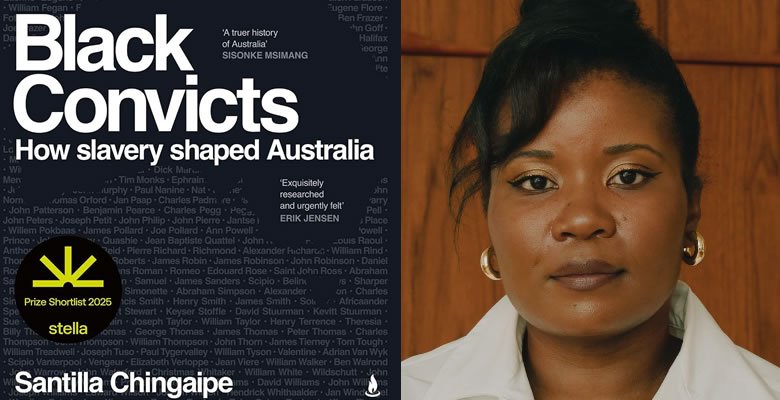
Join Santilla Chingaipe, filmmaker, historian and author, for a groundbreaking history of Australia’s forgotten Black convicts.
Monday 19th October 2026
The Sefton Suite, The Adelphi Hotel,
Ranelagh Place, Liverpool L3 5UL
6.00pm – 7.30pm
Zambian-born Santilla Chingaipe’s debut non-fiction book, Black Convicts: How Slavery Shaped Australia, uncovers the stories of people of African descent in colonial Australia. During eight years of research, Santilla found evidence of hundreds of individuals transported to Australian penal colonies by British authorities during the 18th and 19th centuries, the majority of whom were enslaved people from Caribbean plantations.
When the First Fleet arrived in Australia in 1788, it carried not only British convicts but also men, women and children of African descent. By 1840, hundreds of Black convicts had been transported across the British Empire to Australia’s shores. Yet their stories have been almost entirely erased from history. Santilla Chingaipe uncovers the remarkable lives of Australia’s forgotten Black convicts. Among them are David Stuurman, a South African chief exiled for resisting colonial rule; John Caesar, Australia’s first bushranger; Billy Blue, the ferryman whose name lives on in Sydney’s Blues Point; and William Cuffay, a leading Chartist whose influence helped shape Australia’s labour movement.
Black Convicts was shortlisted for the Stella Prize and longlisted for the prestigious Cundill History Prize, cementing Santilla’s place among Australia’s most important historians. A former SBS World News journalist, Santilla spent nearly a decade reporting across Africa, interviewing some of the continent’s most prominent leaders while also covering Australia’s diverse African diasporic communities. In 2019, she was recognised at the United Nations as one of the most influential people of African descent in the world under 40.
There will be an audience Q&A and the opportunity to purchase signed copies of Black Convicts during the event.
This event is brought to you by the Smithdown Litfest and the Research Institute for Literature and Cultural History at Liverpool John Moores University.